

The herbarium staff at The Morton Arboretum, working as part of the Great Lakes Invasives Network, recently released a guide called Aquatic Invasive Plants and their Look-a-Likes. The guide is available in both web quality (4MB PDF) and print quality (24MB PDF). It contains photos of the invasives and look-a-likes, and distribution maps according to digitally submitted records and voucher records.

The Great Lakes Invasives Network is a partnership of collection-based institutions working to digitize voucher records of invasive species in the Great Lakes Region. These digital images are searchable via their website.


The Interactive Weed Identification Database, created by Mark Renz, University of Wisconsin, contains 280 of the most common weeds/invasive plants found in agricultural, urban, and natural settings in Wisconsin. The database is organized to ask questions about the unknown plant, and, based on the user's input, the website will produce a list of plants (scientific and common names) along with thumbnail images that match the information entered.
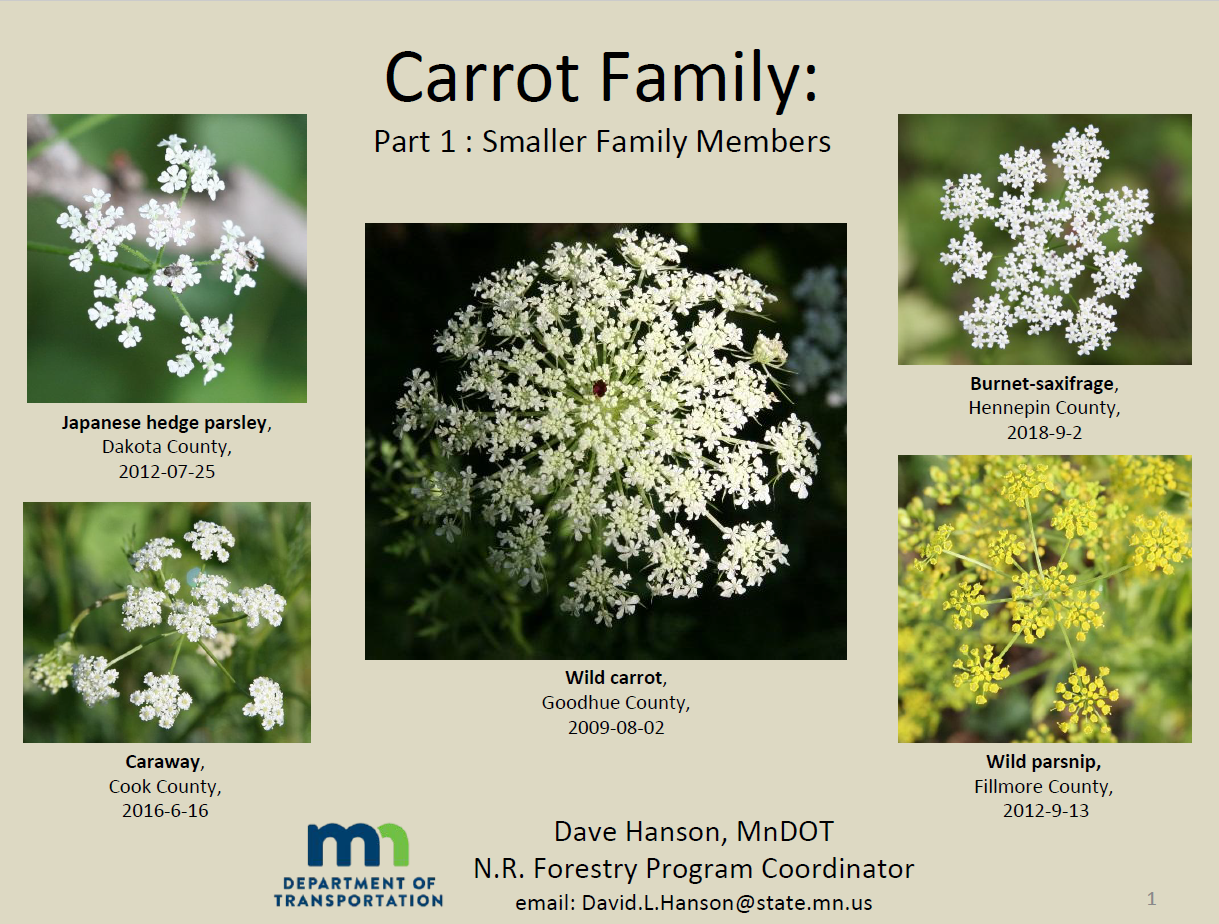
David Hanson, with the Minnesota Dept. of Transportation and Natural Resources Forestry Program, created this guide to help users distinguish between plants in the carrot family, including invasive plants such as wild parsnip, poison hemlock, Japanese hedge parsley, and more.

Check out this handy Guide to Honeysuckles - Lonicera sp. (pdf) developed by Minnesota Department of Transportation. It can help you identify the four most common invasive bush honeysuckle species and hybrids to the species level and also includes a photographic guide to native honeysuckle species of the northern Midwest.