Japanese Chaff Flower, Chris Evans, University of Illinois, Bugwood.org

Japanese Chaff Flower, Chris Evans, University of Illinois, Bugwood.org
Japanese Chaff Flower, Chris Evans, University of Illinois, Bugwood.org
One of the best things you can do to prevent the spread of invasive plants is to become familiar with the challenges and harms caused by these plants, and then learn to identify the species that are present and spreading where you live.
When it comes to invasive plants in gardens and landscapes, there is good news and bad news. The bad news is that invasive plants are often planted intentionally as ornamentals, and several species known to be invasive are readily available for sale from nurseries and garden centers or as components of wildflower seed mixes. The good news is that there are thousands of attractive plants to choose from that are not invasive. Indeed, while many of the most iconic garden plants are not native to the Midwest, the vast majority are not invasive. For example, hostas, hybrid tea roses, most garden hydrangeas, boxwoods, tulips, daffodils, garden salvias, dwarf shrub junipers, and peonies are all non-native to the region but are not known to be invasive.
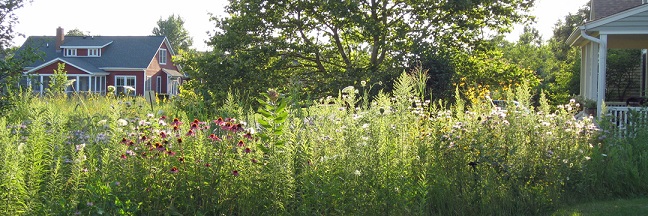
If you want to go a step further to create an environmentally friendly garden, there are hundreds of gorgeous and unique native plant species that make ideal food and habitat for native birds, wildlife and pollinating insects. Below, we’ll give you our tips and tools for avoiding invasive landscape plants and share resources for selecting suitable replacements. MIPN staff are also available to speak to groups on invasives and landscaping for the cost of travel.

The table below features a “dastardly dozen” invasive landscape plants that are still readily available for sale (where not prohibited by state law), along with the problems caused by each, and a native alternative suggestion. For a more comprehensive list with pictures, we suggest you download our free Landscape Alternatives app for iOS or Android. Just go to your app store and search “landscape alternatives.” You can also download a pdf of the accompanying brochure, or purchase brochures here ($1.00 each + shipping). Don’t buy or plant any of these troublesome species, and if you already have them, please consider digging them up and replacing them! If you see any of these species for sale at a nursery or garden center, consider speaking with the manager and request that they stop selling invasive plants.
| Invasive Landscape Species | Ecological Threat | Native Landscape Alternative |
|---|---|---|
| Non-native honeysuckles (Lonicera maackii, L. morrowii, L. tatarica, L. x bella, L. japonica) | Shrubs and vines that invade forest & woodland under-stories. A vine, L. japonica can smother native plants. | Wild honeysuckle, a vine (Lonicera dioica) or twinberry, a shrub (L. involucrata) |
| Burning bush (Euonymus alatus) | A shrub that invades prairie margins and woodland under-stories | Eastern wahoo (Euonymus atropurpureus) |
| Callery/Bradford pear (Pyrus calleryanna) | A small tree that invades prairies, utility & transport right-of-ways, open woodlands, and forest margins | Redbud (Cercis canadensis) |
| Chinese silvergrass (Miscanthus sinensis) | A grass that invades disturbed sites, utility & transport right-of-ways, grasslands, and wet woodland margins | Little bluestem (Schizachyrium scoparium) |
| Dame's rocket (Hesperis matronalis) | A perennial flower that invades utility & transport right-of-ways, wet woodlands, and forest margins | Garden phlox (Phlox paniculata) |
| Japanese barberry (Berberis thunbergii) | A shrub that invades savannas, open-to-closed canopy forests, and woodland margins | Ninebark (Physocarpus opulifolius) |
| Norway maple (Acer platanoides) | A medium-sized tree that invades forests, displacing native trees and under-story plants | Sugar maple (Acer saccharum) |
| Tawny daylily (Hemerocallis fulva) | A perennial flower that invades transport right-of-ways, meadows, and woodland edges | False sunflower (Heliopsis helianthoides) |
| Privets (Ligustrum obtusifolium, L. vulgare) | Shrubs that invade disturbed sites, woodland edges, and riparian forests | Blackhaw (Viburnum prunifolium) |
| Ribbon grass/reed canary grass (Phalaris arundinacea) | A grass that invades wetlands, transport right-of-ways, and disturbed grasslands | Common oak sedge (Carex pensylvanica) |
| Siberian elm (Ulmus pumila) | A medium-to-large tree that invades disturbed prairies and stream banks | Basswood (Tilia americana) |
| Wintercreeper (Euonymus fortunei) | A creeping groundcover that invades forest openings and margins and can smother native plants and trees | Wild ginger (Asarum canadensis) |
In addition to not intentionally planting invasive plants, gardeners should keep a look-out for invasives sprouting from wind or wildlife dispersed seeds. Gardeners should also take care to buy compost, mulch, and hey that are certified weed seed free. To learn more about weed-free certified products, check out our fact sheet for consumers. If you produce or sell garden supplies, we have a fact sheet for producers too.
In 2020, MIPN worked with the USDA Forest Service to produce a PDF guide for homeowners looking to establish native plants to help ward off invasives. While this guide walks the reader through important steps and considerations, it was written for a broad geographic area and does not recommend specific species.
There are plenty of exotic garden plants that aren’t invasive, but native plants often provide additional environmental benefits. Our Midwest native plants co-evolved with native birds, critters, and insects and often provide superior habitat and food resources. The key to choosing a native plant (or any plant, really) is to match the plant’s characteristics with your goals for the garden, and to match the plant’s needs with the site conditions. With trees and large shrubs, it is critical that the plant’s maximum size fits the space available. For all plants, it is important that they be planted in a location that meets their needs for light availability, soil richness, and moisture.
Here are some excellent resources that can help you choose plants for a Midwestern garden:
If you are interested in having MIPN come talk to a gardening club or native plant group about landscape invasives, please let us know. We require a stipend to cover travel expenses but do not expect an honorarium. Within the Midwest, travel costs are typically $100 – $300 depending on the distance our staff need to travel. Here’s an example of a presentation we can put together for this type of event. Depending on the time of year, we may be able to bring live or preserved samples!

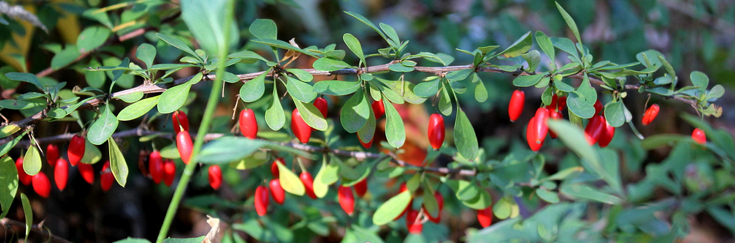
Invasive plants can affect your ability to enjoy natural areas, parks, and campgrounds. Hikers, cyclists, ATV riders, hunters, and horseback riders all enjoy well-maintained trails, and invasive plants can grow over trails, making them difficult to navigate. Natural scenic beauty and diverse wildlife sought by nature enthusiasts are compromised by invasive plants, which often form single-species stands, displacing attractive native flowers. Some invasive plants can even increase health hazards. For example, Japanese barberry (pictured below) has very dense foliage which creates a humid micro-climate perfect for incubating the ticks that carry Lyme disease and other illnesses.
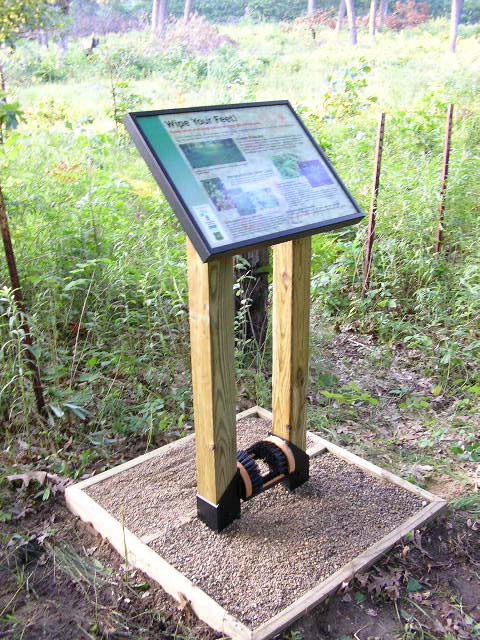
Outdoor recreationalists can exacerbate the spread of invasive species by inadvertently carrying seeds or other plant parts from site to site on their clothes, equipment, or animal companions. Here are precautions that you can take to prevent the spread of invasive plants: